
This video discusses the best tips and tricks you should be aware of for your to excel at potty training!
Foster Independence:
Encourage Self Care- As your child becomes more comfortable encourage them to take more responsibility for the process.
Skill Building- Gradually introduce skills such as wiping and hand washing, using positive reinforcement to encourage these steps.
AVOID POWER STRUGGLES WITH YOUR CHILD! YOU WILL LOSE!
Create A Routine
Consistency Is Key
Use Visual Schedules
This can include characters and objects that your child connects with.
For example: If your child likes trucks then make a truck themed visual schedule that your child will be excited about.
Remember That Many Children Learn Differently
Typically it will take about 8 weeks for your child to be potty trained!!
Does your child have sensory needs?
Be mindful of sensory sensitivities. Choose a toilet seat that is comfortable and consider using sensory-friendly wipes or toilet paper.
Familiarize Your Child With The Restroom:
Introduce the toilet in a non-threatening way. Let your child explore the bathroom and become comfortable with the space.
Consider making potions in the toilet by using plumbing friendly ingredients.
Break down the bathroom process into small and simple steps.
Try timing your child on the toilet and slowly build up how long they can sit there. The goal is to get them comfortable enough to relax their pelvic floor muscles.
Use “First then language”
Example: First we wipe then we get off the potty.
Adapt the environment to your child.
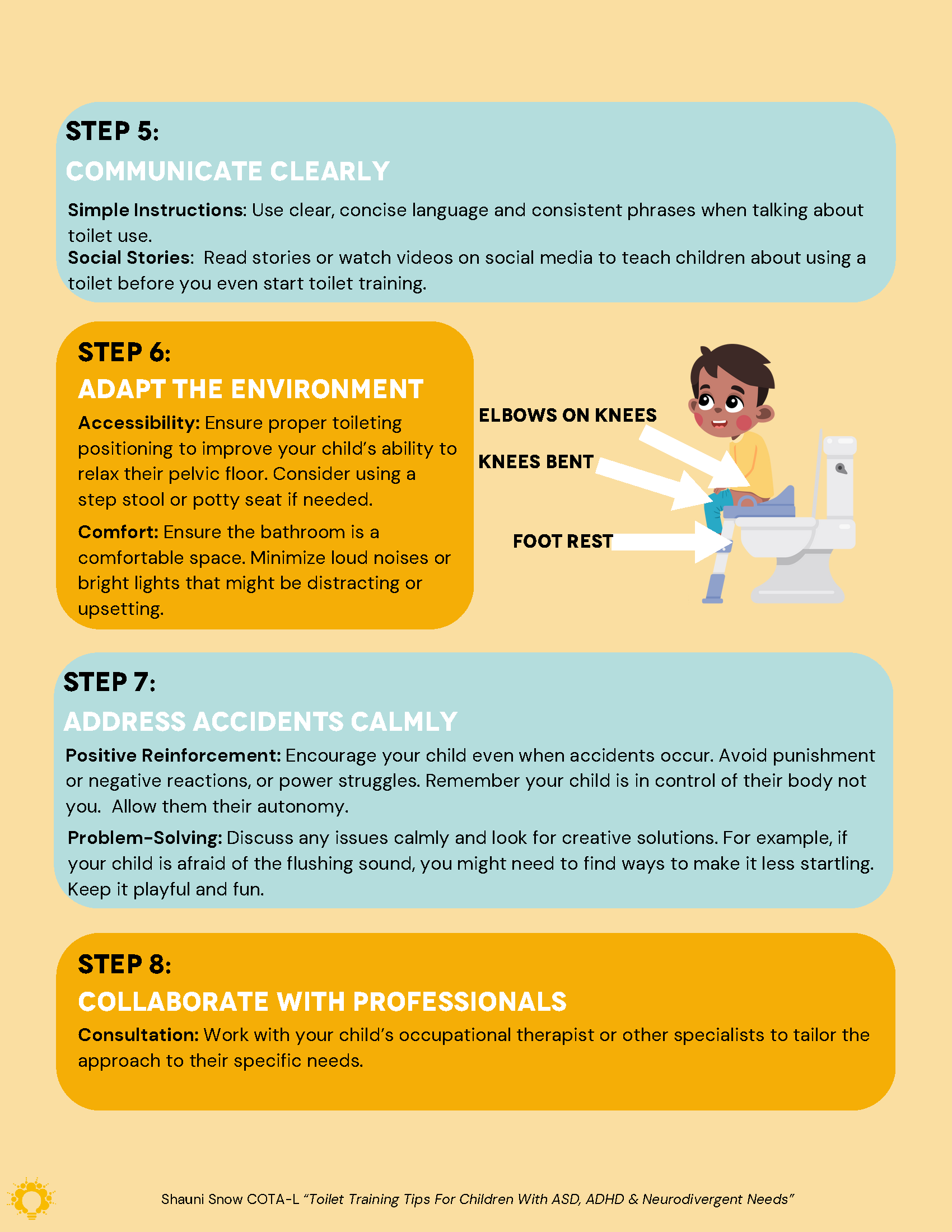
Make sure your toilet is accessible and allows for proper positioning. You may need to use a step stool or potty seat.
If your child has sensory needs you may need to consider dimming the lights, minimizing noise, and purchasing a sensory friendly toilet seat.
Introduce your child to public restrooms before the potty training process begins.
ADDRESS ACCIDENTS CALMLY!
Avoid punishment or negative reactions to potty training accidents. This can create a power struggle between you and your child. You will always lose the power struggle and it will set your child’s progress back further.