

Confidence in Every Move: Why the Right Adaptive Equipment Matters
Morgan Harper, PT, DPT
If your child has difficulty navigating community environments, such as their school, playground, the grocery store, or any other, first things first, you are not alone. According to the World Health Organization, nearly 2.5 billion people worldwide use assistive technologies to help participate in day-to-day activities and approximately 240 million are children. As Physical Therapists, our goal is to help make mobility as independent as possible with the right tools for that specific child. This may include the addition of an item that is commonly referred to as adaptive equipment. Adaptive equipment help assist with independent mobility. The adaptive equipment that Physical Therapists see the most are with standers, gait trainers, posterior walkers, wheelchairs, and adaptive bikes. Listed below are more details about these specific devices and whether your child will benefit from them.
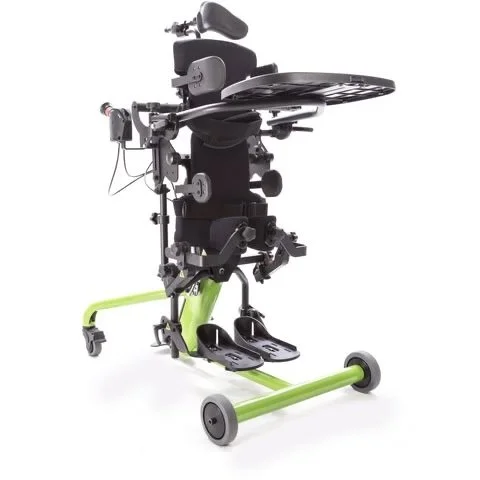
Standers:
Standers are designed to help children who are unable to stand independently experience an upright position safely. This is important for more than just mobility—standing supports bone health, joint alignment, muscle length, digestion, and even breathing. Many standers allow for adjustments in positioning, such as prone (facing forward), supine (facing upward), or vertical alignment, depending on a child and caregiver’s needs. Beyond the physical benefits, standers also offer a child social and developmental benefits by allowing them to engage with peers at eye level and participate in activities in a new way.
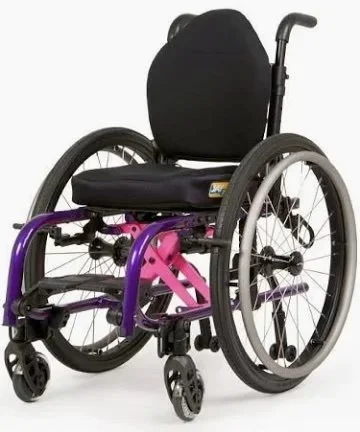
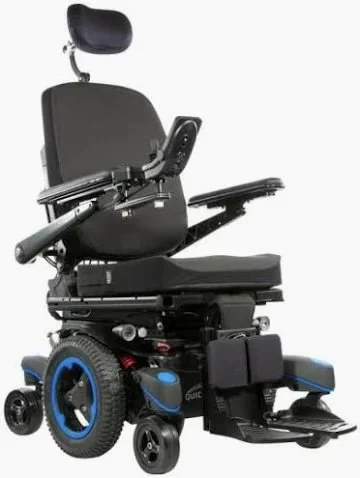
Wheelchairs:
Wheelchairs are a powerful tool for independence. For children who have limited endurance or require assistance with mobility, a wheelchair allows them to explore their environment, keep up with peers, and conserve energy for other activities. Pediatric wheelchairs can be manual or powered, and they are highly customizable to support posture, comfort, and functional use. Early access to mobility can significantly impact cognitive and social development by giving children control over their movement.
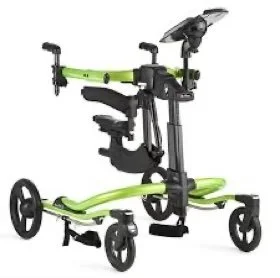
Gait Trainers
Gait trainers are mobility devices that help children practice walking in a safe and controlled way. Unlike posterior walkers, gait trainers typically provide more support at the trunk and pelvis. Gait trainers are especially helpful for children who are just starting to learn how to weight bear and coordinate stepping but are not yet able to do so independently. Gait trainers can be used in therapy sessions, at home, or school and they help children build strength, endurance, and confidence in upright mobility.
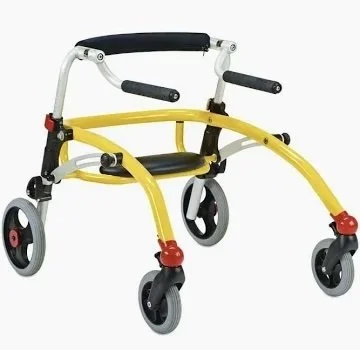
Posterior Walkers
Posterior walkers are positioned behind the child to encourage a more upright posture and natural walking pattern compared to traditional anterior walkers (which are placed in front). Posterior walkers are often used for children who have some independent walking ability but still need support for balance, coordination, and alignment. Because the walker is behind them, children are encouraged to step forward rather than lean, promoting better alignment and muscle activation. Posterior walkers can be a great step toward independent walking for many children.
Every child is different, and there is no one-size-fits-all approach to equipment. As a pediatric physical therapist, I work closely with families, physicians, and equipment specialists to assess your child’s strengths, challenges, and goals. The right device is not just about physical support—it’s about enhancing participation, independence, and quality of life.
If you’re a parent or caregiver exploring these options, know that asking questions and trying different equipment is part of the process. These tools are not limitations; they are opportunities—helping children access their world in ways that are meaningful, engaging, and empowering.
Reference: