

Making Sensory Bins
Melissa Perez, OTR/L
Sensory bins are one of the most effective—and fun—tools you can use at home to support your child’s development. As an occupational therapist, I often recommend sensory bins because they provide meaningful opportunities for children to explore, learn, and regulate their bodies through play. Whether your child is a toddler or early elementary age, sensory bins can be easily adapted to meet their individual needs while supporting skills that carry over into everyday routines.
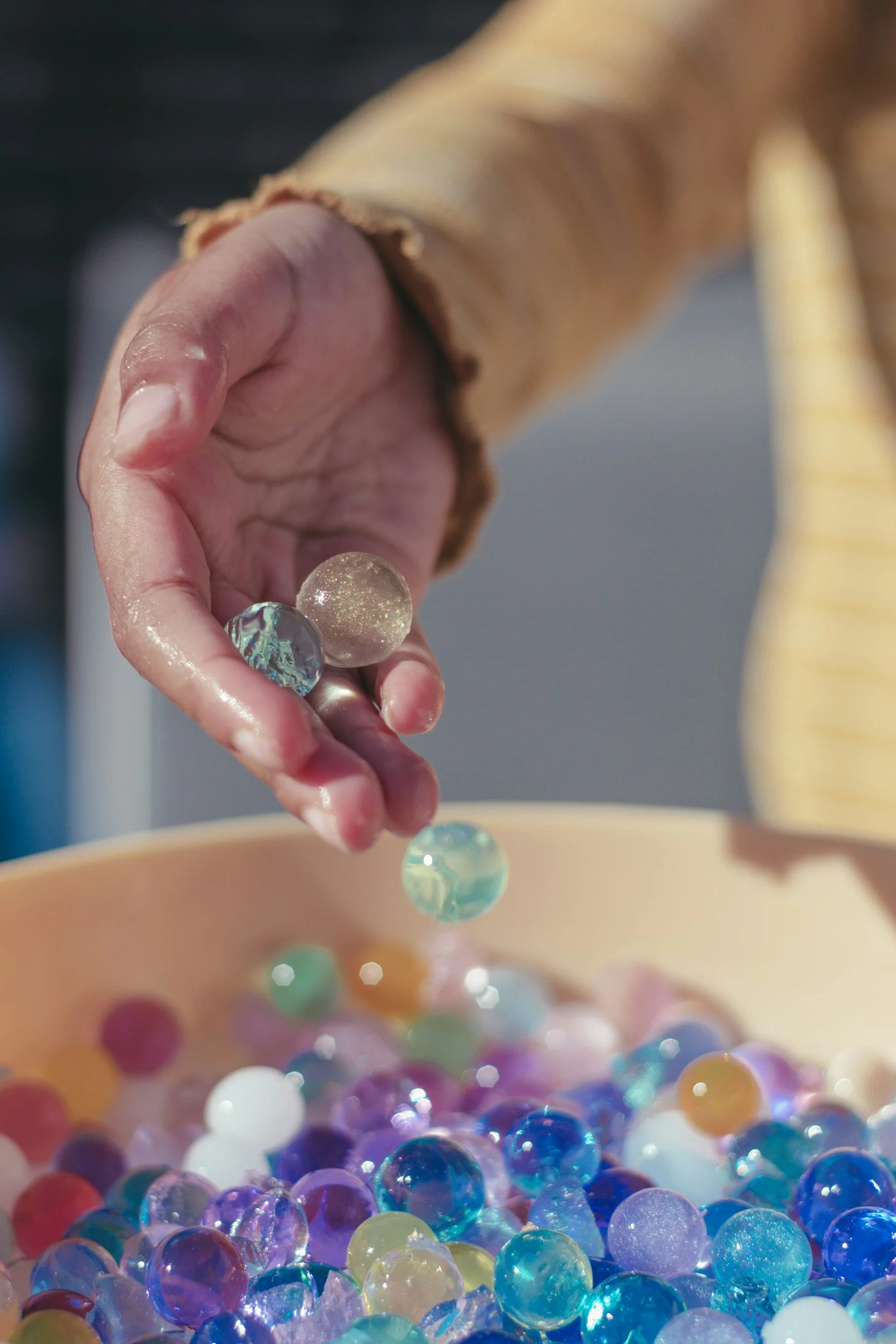
At their core, sensory bins are simply containers filled with materials that engage the senses—most often touch, but also sight, sound, and sometimes smell. You can use a plastic storage bin, a baking dish, or even a large bowl. Common base materials include rice, dried beans, kinetic sand, water, or shredded paper. From there, you can add simple items like scoops, cups, tongs, or small toys. Sensory bins don’t need to be complicated or expensive—many of the best ones are made with items you already have at home.
Sensory bins support a wide range of developmental skills. They help build fine motor strength and coordination through scooping, pouring, pinching, and grasping. They also support sensory processing by exposing children to different textures in a safe and controlled way. Additionally, sensory bins encourage attention, problem-solving, creativity, and language development. Many children also find them calming, making them a great option for emotional regulation or quiet time (Case-Smith et al., 2015; Schaaf & Mailloux, 2015).
One of the best parts about sensory bins is how easily they can be adapted for different ages, interests, and developmental levels. For younger children or those new to sensory play, start with larger, less messy materials like dry pasta, pom-poms, or blocks. For children who are more comfortable, you can introduce messier textures like sand, rice, or even shaving cream (with supervision). If your child is sensitive to touch, allow them to explore using tools first before encouraging hands-on play. Following your child’s lead is key to making the experience positive (Parham & Mailloux, 2015).
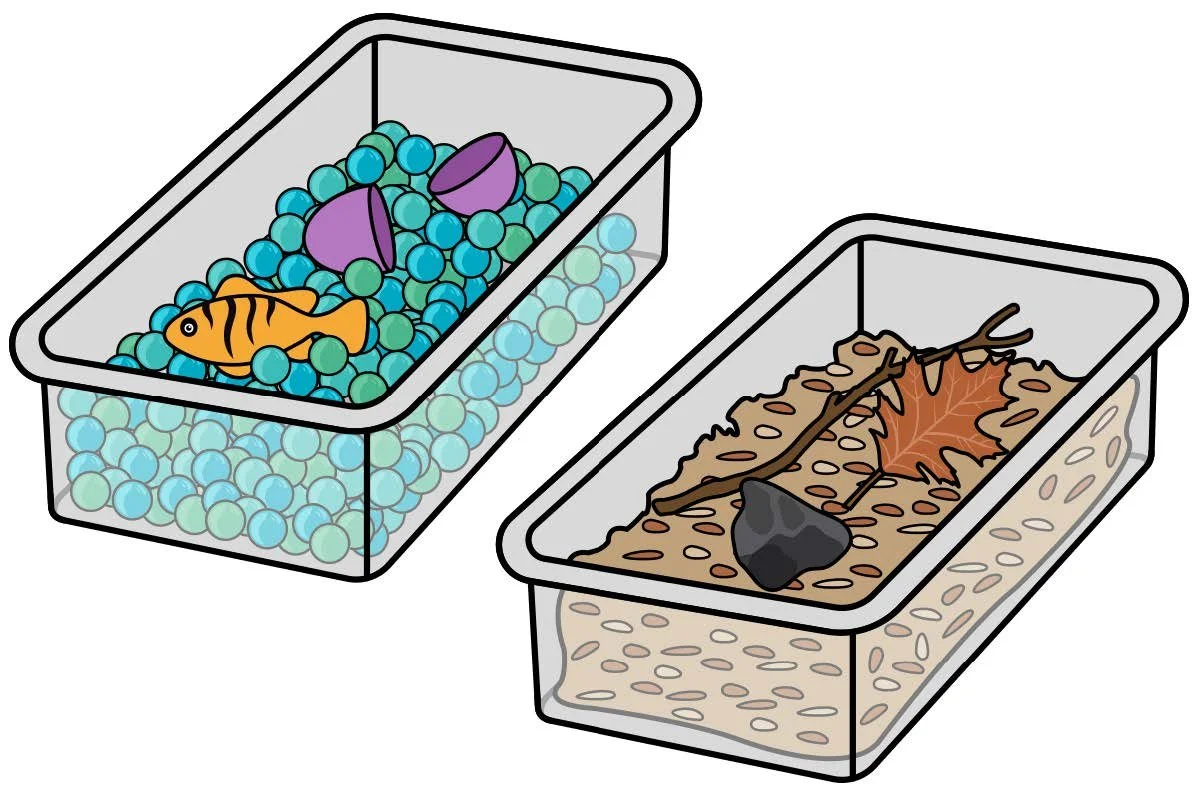
Here are a variety of sensory bin ideas parents can try at home:
● Basic bins: Rice with scoops and cups, beans with small containers, or water with measuring tools.
● Themed bins: Farm animals in shredded paper “hay,” ocean animals in blue-dyed rice, or construction trucks in sand.
● Learning bins: Hide letters, numbers, or shapes for your child to find and name.
● Fine motor bins: Use tongs or tweezers to pick up small objects like pom-poms or beads (for older children).
● Seasonal bins: Leaves and acorns in the fall, fake snow or cotton balls in the winter, flowers and bugs in the spring.
● Calming bins: Soft textures like kinetic sand or warm water with sponges can help promote relaxation.
You can also increase the challenge as your child grows. Try adding simple directions (“find three red items”), creating patterns, or incorporating pretend play scenarios. Sensory bins can even support daily routines—for example, practicing scooping and pouring can translate to mealtime skills, while sorting items can build organization and attention.
It’s important to keep safety and structure in mind. Always supervise young children, especially if they tend to put items in their mouth. Set clear expectations, such as keeping materials inside the bin, and consider placing a towel underneath for easier cleanup. If your child becomes overwhelmed, take a break and reintroduce the activity more gradually.
Incorporating sensory bins into your routine doesn’t have to be time-consuming. Even 10–15 minutes a day can have a big impact. You can use them during transitions, as a calming activity after school, or as an engaging option while you’re preparing meals. With a little creativity and flexibility, sensory bins can become a powerful, play-based way to support your child’s development, independence, and overall well-being (American Occupational Therapy Association [AOTA], 2020).
References
American Occupational Therapy Association. (2020). Occupational therapy practice framework: Domain and process (4th ed.). American Journal of Occupational Therapy, 74(Suppl. 2), 7412410010.
Case-Smith, J., O’Brien, J. C. (2015). Occupational therapy for children and adolescents (7th ed.). Elsevier.
Parham, L. D., & Mailloux, Z. (2015). Sensory integration. In J. Case-Smith & J. C. O’Brien (Eds.), Occupational therapy for children and adolescents (7th ed.). Elsevier.
Schaaf, R. C., & Mailloux, Z. (2015). Clinician’s guide for implementing Ayres Sensory Integration®. In A. C. Bundy, S. J. Lane, & E. A. Murray (Eds.), Sensory integration: Theory and practice (2nd ed.). F.A. Davis.