

How Sensory-Based Vestibular Processing Impacts Child Development — and How Occupational Therapy Can Help
Rachel Cohen OTR/L
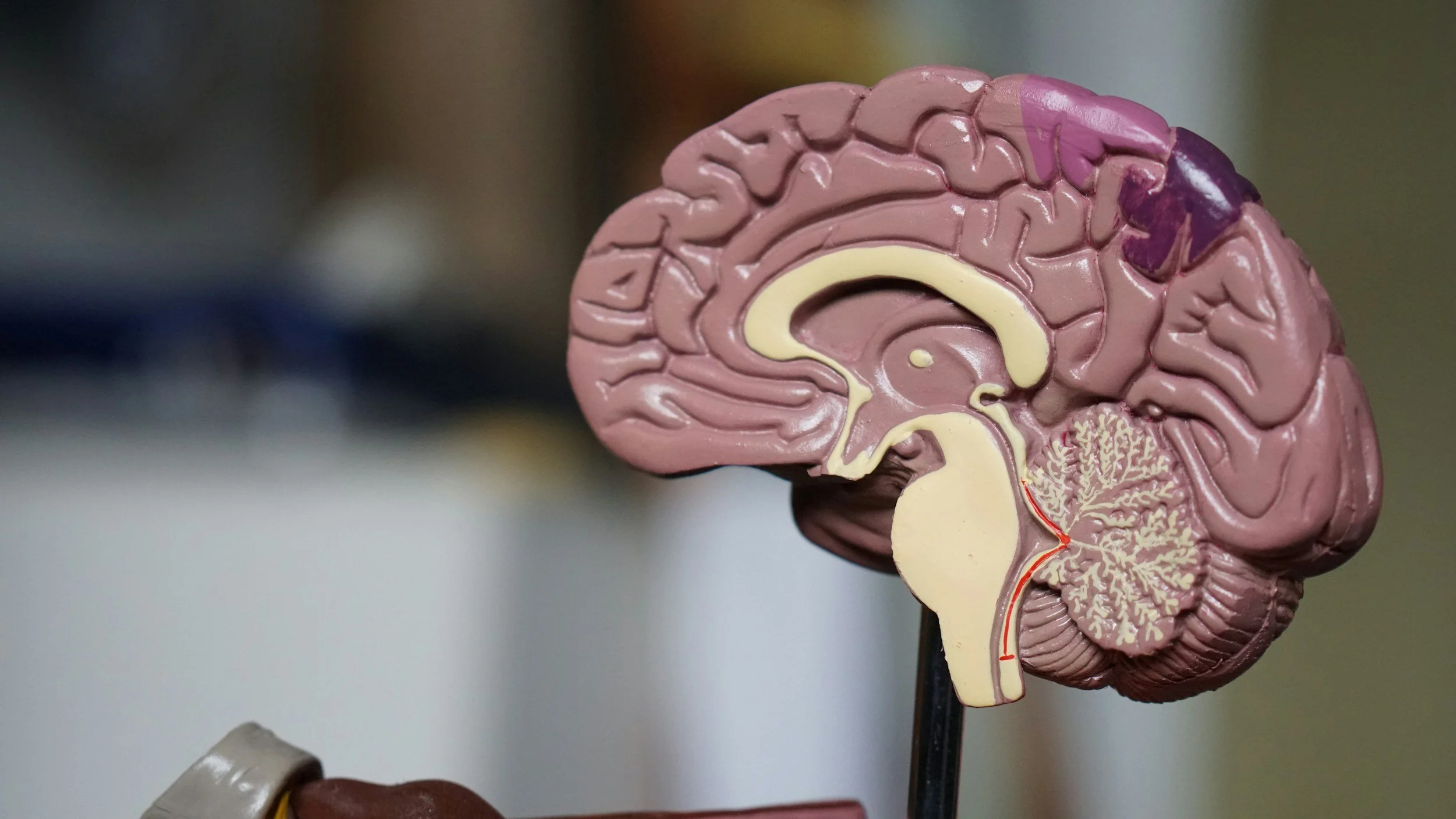
The Vestibular System
The vestibular system is one of the most powerful—and most overlooked—sensory systems. Located in the inner ear, it is the body’s built-in way of understanding movement, balance, spatial orientation, and gravity.
Accurate processing of vestibular input allows us to feel grounded, organized, safe, and regulated. Without it, one may feel as if they are lost in space.
Vestibular processing plays a key role in all areas of life, including motor, social, emotional, cognitive, and sensory development.

Differences In Vestibular Processing
Everyone experiences differences in how they process and respond to vestibular sensory input. For some children, these differences lead to challenges that impact everyday life and development.
Children with sensory-based vestibular differences can present in a variety of ways, including:
Vestibular under-responsive/seeking
Have a high threshold for vestibular input
Require more intense movement to either regulate or register vestibular input
Move around more than other children, or
Seem low energy and need more vestibular input to increase level of arousal

Vestibular over-responsive (sensitive or avoidant)
Have a low threshold for vestibular input
Actively avoid or show sensitivity toward vestibular input
May become overwhelmed or frightened with certain types of movement

Vestibular discrimination difficulties
Interpret vestibular input inconsistently and less accurately than others
Experience challenges with balance, coordination, and directionality
It is important to note that there are different types of vestibular input, as not all movement is the same. Each have their own unique implications, and a child may be over/under-responsive to one type and/or have difficulty discriminating another type. An overview of these different types of movement include:
Linear acceleration (forward/backward, side-to-side, up/down movements)
Angular movement (horizontal, vertical, and diagonal rotation)
Changes in head position (head tilting, transitional movements, upside-down)
Start-stop movements (speeding up, slowing down, quickly halting)
Constant vs. changing (steady/sustained motion verse variable and unpredictable movement)
Passive vs. active (being moved by someone/something verse self-initiated movement)

How Vestibular Differences Impact Development
Whether a child is under-responsive, over-responsive, or has difficulty with discrimination, vestibular processing differences can impact various areas of development. Vestibular processing provides key support in promoting the development of:
Motor skills
Gross motor skills and motor planning
Sense of gravity helps use to keep an upright posture, know where the body is in space, and maintain balance
Helps us to anticipate and adjust for the speed, force, distance, timing, and sequencing required for smooth coordinated movement
Allows a child to climb, swing, roll, tip their head in any direction, or ride a bicycle without fear or disorientation
Fine-motor/visual-motor skills
Supports postural stability, bilateral coordination, crossing midline, and spatial awareness necessary for smaller fine-motor/visual-motor tasks, including handwriting, cutting with scissors, and manipulating small objects
“Proximal stability equals distal mobility” means that stable postural control is essential for coordinated movement of the hands and fingers (distal parts of the body)
Ocular-motor skills
Vestibular and visual systems are tightly linked. The vestibulo-ocular reflex (VOR) keeps vision stable when the head moves.
When vestibular processing is weak, vision may blur during movement, tracking objects is harder, and depth perception can be affected; this directly impacts activities such as sports, reading, and copying form the board
Sensory integration skills
The vestibular system acts as the “sensory organizer” as it helps all other systems communicate and work together effectively, playing a crucial role in how we process, adapt, and respond to sensory information in the environment and our bodies
Having a stable sense of directionality (up, down, left, right, etc.), orients a child to where they are in space, and thus, where other sensory input is coming from
Without this, things like unexpected touch may feel alarming, sounds may seem confusing, or visually locating items may be difficult
Emotional and sensory regulation
The vestibular system serves as the “anchor” that allows us to trust ourselves and the world around us, supporting confidence and sense of safety
If vestibular processing is unclear, everyday being can feel disorienting or overwhelming, leading to feelings of anxiety, irritability, hyperactivity, or dysregulation
Vestibular input directly influences the autonomic nervous system; slow linear movement is typically calming, where as fast rotary movement is typically alerting
Social engagement
Vestibular processing helps children feel secure, regulated, and confident in their bodies—key foundations for connecting with others
Children with vestibular challenges may appear withdrawn, overly active, controlling, or socially unsure
Play exploration
A well-functioning vestibular system helps children engage in active play ideas, explore new play ideas, and attend to quieter play ideas, opening doors for more adventurous, creative, and developmentally meaningful play
When vestibular processing is over-responsive, under-responsive, or inconsistent, children may avoid fast or unpredictable play, seek excessive active play, fatigue quickly, or have difficulty organizing play ideas
Academic development
Effective vestibular processing affects the brain’s readiness to learn, allowing children to maintain an organized level of arousal, orient their bodies for the task at hand, filter and attend to necessary information, and coordinate movements effectively to complete assignments
When vestibular processing is inefficient, children may appear inattentive, impulsive, or disorganized in their thinking, with their nervous system working harder just to stay upright and oriented.

HOW OCCUPATIONAL THERAPY CAN HELP
OT can help support a child with sensory-based vestibular differences in several ways, including:
Individualized sensory assessment:
Occupational therapists are uniquely equipped in assessing the sensory systems and understanding how they impact function, development, and daily life
Through assessment, observation, and clinical reasoning, OT’s evaluate vestibular processing, helping to identify if a child needs support with seeking, avoiding, or integrating vestibular input
Therapeutic vestibular activities to improve:
Regulation
Providing a time and space with ideas for exploring various movement experiences (swinging, rolling, climbing, spinning, scootering, etc.) to either be alerting or calming, depending on the individual and the activity
Tailoring vestibular input (i.e. presentation, intensity, direction, duration) in a way that supports a child in meeting high thresholds or raising low thresholds
Vestibular discrimination and sensory integration
Structuring and adding aspects to movement activities that intentionally incorporate different types of vestibular input
Pairing vestibular input with other sensory systems to strengthen these connections
Participation in daily activity
Upgrading, downgrading, and modifying movement activities to create “just right challenges” that promote skill development and confidence building
Identifying strategies that enhance participation in meaningful activities during sessions and ways they can be carried over outside of OT
Home, school, and community recommendations:
Ideas for understanding and supporting children with vestibular processing differences at home, school, and in the community
Activities that can by carried over at home and during daily activities to further improve vestibular functioning

Final Thoughts
The vestibular system acts like the body’s internal “GPS.” It provides constant information about movement, head position, balance, and gravity. This sensory input influences how a child sits upright, learns new motor skills, stays alert during tasks, feels confident moving through space, and even how they interact socially and emotionally.
By incorporating vestibular input and strategies within playful, meaningful activities, OT helps children feel more secure in their bodies/environment, improve regulation, and increase confidence in their ability to learn, explore, and participate in everyday activities.